
LVP vs Tile Flooring
March 29th, 2026 | by Nick Kayser
LVP vs Tile Flooring: Which Is Right for Your East Valley Home?
If you’re planning new flooring in Gilbert, Chandler, Mesa, Tempe, Scottsdale, or Ahwatukee, you’ve probably narrowed it down to two options: luxury vinyl plank (LVP) or porcelain tile. Both are excellent choices for Arizona homes — but they perform differently, install differently, and feel completely different underfoot.
The wrong choice doesn’t ruin your home, but the right choice makes a difference you’ll notice every single day for the next 20+ years. This guide breaks down LVP vs tile in plain terms so you can make the decision that fits your home, your lifestyle, and your budget.
At Mustache Approved Remodeling (ROC #309760), we install both — and we’ll give you an honest take on when each one makes sense.
Ready to get started? View our complete flooring installation services for the East Valley.
Watch: East Valley Flooring Installation Overview
See how we approach flooring projects throughout the East Valley — from subfloor prep through final transitions:
Why This Decision Matters More Than Most People Realize
Flooring is one of the highest-impact upgrades you can make to an Arizona home. It covers every square foot of your living space, sets the tone for your entire interior design, and directly affects daily comfort. But it’s also one of the most common sources of buyer’s remorse — usually because homeowners chose based on appearance alone without considering how the material performs in the specific rooms it’s going into.
In the East Valley, the stakes are higher than most markets. Arizona’s extreme heat, low humidity, and wide temperature swings create real performance differences between flooring materials. What works beautifully in a Phoenix home may crack, warp, or feel uncomfortably hot (or cold) underfoot in ways a showroom visit won’t reveal.
Both LVP and tile are excellent for our climate — but they’re excellent in different ways and for different reasons.
What Is LVP Flooring?
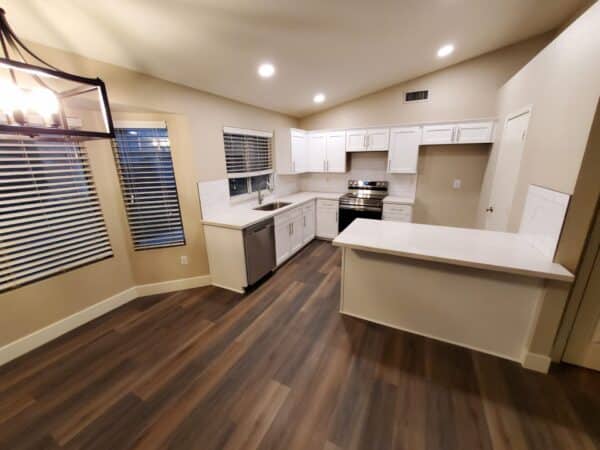
Luxury vinyl plank is a multi-layer engineered flooring product designed to mimic the look of hardwood while outperforming it in durability and moisture resistance.
How LVP Is Constructed
Modern premium LVP consists of four bonded layers:
- Wear Layer (top): A clear protective coating — measured in mils — that resists scratches, scuffs, and daily wear. We install LVP with a minimum 20-mil wear layer for residential use.
- Design Layer: A high-resolution photographic image layer creating realistic wood grain, stone, or tile patterns.
- Core Layer: A rigid SPC (Stone Plastic Composite) or WPC (Wood Plastic Composite) core providing stability and structure. Rigid core is essential for Arizona — flexible core products shift and separate in extreme heat.
- Backing Layer: Provides cushioning, moisture protection, and sound dampening. Many premium products include attached underlayment.
Budget LVP sold at big-box stores typically uses thinner wear layers (6–12 mil), flexible cores, and inferior locking systems. These products fail within a few years. The products we install are night-and-day different.
What LVP Looks and Feels Like
Modern LVP is virtually indistinguishable from real hardwood at a glance. Realistic embossing, deep grain textures, and natural color variation make premium LVP genuinely beautiful. Underfoot, it feels warmer and softer than tile — more forgiving on joints when you’re standing in the kitchen for an hour.
What Is Tile Flooring?
Porcelain tile is a kiln-fired ceramic product made from refined clay, fired at extremely high temperatures to create an exceptionally dense, hard surface. It’s been used in homes for centuries — and for good reason.
How Porcelain Tile Is Different from Ceramic
Both are tile, but porcelain is denser, harder, and less porous than standard ceramic. For East Valley homes, we use porcelain almost exclusively because:
- Lower water absorption rate (critical for bathrooms and kitchens)
- Greater density makes it more resistant to cracking under load
- Handles Arizona temperature extremes without expanding or contracting
- Consistent sizing and thickness for professional installation
We source our tile from Arizona Tile — a premium supplier with consistent quality, realistic patterns, and local availability. The difference between Arizona Tile porcelain and big-box budget tile is the same as the difference between premium LVP and flexible-core vinyl.
Modern Tile Options
Tile has evolved well beyond the 12×12 squares of the 1990s. Today’s options include:
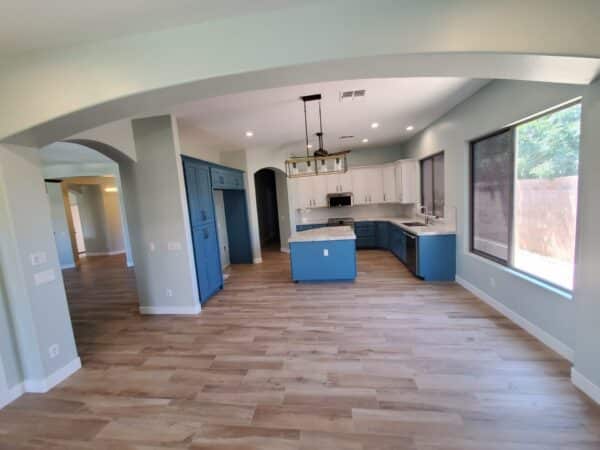
- Large format tile (12×24, 24×24, 24×48, or larger) — fewer grout lines, cleaner contemporary look
- Wood plank tile (6×36, 8×48, 12×48) — realistic hardwood appearance with zero moisture risk
- Herringbone and chevron patterns — premium visual impact from rectangular formats
- Textured and matte finishes — slip-resistant, practical for Arizona living areas and bathrooms
For a full breakdown of tile installation techniques, leveling systems, and material options, visit our tile flooring installation page.
LVP vs Tile: How They Compare for East Valley Homes
Durability and Longevity
Both materials last for decades when properly installed. The difference is in how they fail when something does go wrong.
Premium LVP with a rigid core and 20-mil wear layer holds up to heavy foot traffic, pets, kids, and daily life without refinishing. It’s scratch-resistant and dent-resistant. If a plank is damaged, individual planks can often be replaced.
Porcelain tile, when professionally installed with the Raimondi leveling system, proper thinset, and back-buttering on every tile, will outlast almost any other flooring material — including LVP. A well-installed tile floor can genuinely last 50+ years. The caveat: if the subfloor wasn’t prepared correctly, tiles crack. That failure comes back to installation quality, not the material itself.
Edge: Tile (installed correctly)
Comfort Underfoot
This is where LVP wins decisively for most homeowners. LVP has flex and cushion — it gives slightly underfoot, which is easier on joints and more comfortable for long periods of standing. It also holds ambient temperature, so it doesn’t feel cold in the morning or hot after sitting in Arizona afternoon sun.
Tile, on the other hand, is hard and unforgiving. In Arizona summers, tile near south-facing windows or in rooms that heat up significantly can become uncomfortably warm. In the morning, tile on a slab feels cold until the HVAC brings the room up to temperature.
If you live in the space daily and comfort is a priority, LVP feels better to live on.
Edge: LVP
Heat Performance in Arizona
Arizona’s extreme summer heat is a real consideration. Tile performs better under sustained high temperatures than LVP. Porcelain is inorganic and dimensionally stable — it does not expand, contract, or off-gas regardless of how hot your home gets.
Quality rigid core LVP is designed to handle Arizona temperatures, but it does have heat tolerance limits. Budget LVP with flexible cores can shift, buckle, or separate when exposed to sustained radiant heat — a real issue in homes that get very hot (over 100°F interior) or near south-facing windows, sliding doors, or hearths.
If your home runs hot, you’re installing near a fireplace, or west-facing rooms get afternoon heat, tile is the more reliable choice. See our flooring FAQs for guidance on LVP near fireplaces.
Edge: Tile
Moisture and Water Resistance
Both materials handle moisture well — but differently.
Premium rigid core LVP is 100% waterproof at the plank level. Spills, pet accidents, and humidity changes won’t damage the planks themselves. However, water that sits in seams for extended periods can work its way under the floor and affect the subfloor, so prompt cleanup still matters.
Porcelain tile is also waterproof at the tile level. The variable is the grout. Traditional cement-based grout is porous and absorbs moisture over time — requiring annual sealing. We use premium professional-grade grout that never requires sealing, which eliminates that maintenance requirement entirely.
For bathrooms and shower areas specifically, tile is the industry standard and what we recommend. For kitchen floors and living areas, both LVP and tile handle moisture without issue. Visit our shower tile installation page for waterproofing specifics.
Edge: Tie (both excellent; grout selection matters for tile)
Maintenance and Cleaning
LVP is arguably the lower-maintenance option day-to-day. Sweep or vacuum regularly, damp mop with an LVP-approved cleaner, done. No sealing, no special treatments, no annual maintenance tasks.
Tile with our premium grout system is equally low-maintenance — no sealing required, ever. Standard grout (which many contractors use) does require annual resealing to prevent staining and moisture absorption. If your tile was installed by another contractor with standard cement grout, that’s a recurring task. Ours isn’t.
Edge: Tie (with our grout; standard grout tips tile toward more maintenance)
Installation Complexity and Timeline
LVP installs faster and with fewer variables. A whole-home LVP installation of 1,500 sq ft typically takes 5–7 days including removal and subfloor prep. LVP can also be installed over certain existing surfaces if they’re flat, stable, and in good condition.
Tile installation is more time-intensive. Thinset requires 24 hours to cure before grouting, grout requires additional cure time, and large format tile demands meticulous subfloor preparation and leveling. A whole-home tile installation of the same square footage takes 3–4 weeks. That additional time is worth it for the result — but it’s a real consideration if you need to minimize disruption.
Edge: LVP (significantly faster)
Cost Comparison
LVP is typically less expensive than tile — both on a per square foot basis and for total project cost.
LVP flooring projects in the East Valley run $15–20 per square foot all-in — that includes removal of your existing flooring, premium materials, and professional installation. A whole-home LVP project at 1,500 sq ft typically runs $22,500–$30,000.
Tile flooring projects run $22–27 per square foot all-in — including removal, premium Arizona Tile porcelain, and professional installation. A whole-home tile project at 1,500 sq ft typically runs $33,000–$40,500. Pattern installations (herringbone, chevron) sit at the higher end of that range due to additional cutting and labor — see our tile flooring installation page for more detail.
These are real project costs based on what East Valley homeowners actually pay — not per-square-foot material rates you’d see at a big-box store that don’t include prep, removal, or finishing.
Edge: LVP (lower cost at both material and installation level)
Design and Visual Impact
Both materials offer enormous design range — but tile gives you more options. Large format tile, wood plank tile, pattern layouts, grout color coordination, and custom designs create looks that LVP simply can’t replicate. The visual weight and permanence of a well-executed tile floor is genuinely different from vinyl, even premium vinyl.
If design is your primary driver and you want a floor that looks like a magazine feature, tile has the edge. LVP is beautiful — but it has a ceiling. Premium porcelain tile does not.
Edge: Tile
What Our Flooring Installation Process Looks Like
Regardless of whether you choose LVP or tile, here’s what a professional flooring installation with Mustache Approved looks like from start to finish. We follow the same proven process for both materials — the preparation phase is where the real work happens.
Step 1: Consultation and Material Selection
We evaluate your space: total square footage, room layouts, current subfloor type (concrete slab vs. wood subfloor), moisture concerns, and traffic patterns. We discuss which material makes the most sense for each room and your lifestyle. We provide material samples and — for visual reference — access to our Virtual Showroom 3D design consultation so you can see how your new floors look before we break ground.
Step 2: Existing Flooring Removal and Demolition
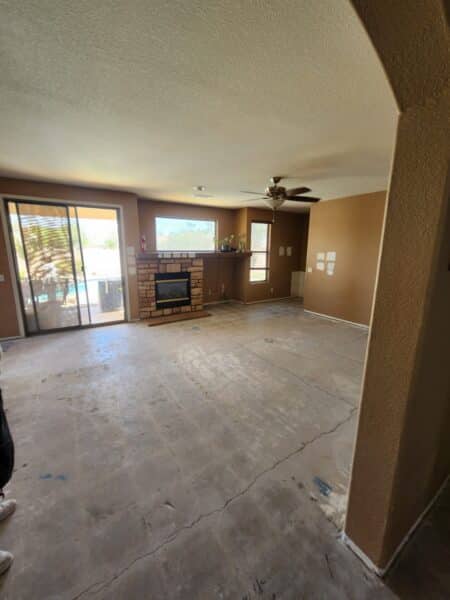
We handle full removal and disposal of existing flooring — carpet, tile, LVP, laminate, or hardwood. Tile removal over concrete is the most labor-intensive and is reflected in cost. All debris is cleared before any subfloor work begins. This is also when unforeseen conditions first become visible (more on that below).
Step 3: Subfloor Inspection and Preparation
This is the most critical phase of any flooring installation — and where shortcuts cause failures. We inspect for structural integrity, moisture, flatness, and damage. Concrete slabs are moisture tested with professional meters. Wood subfloors are checked for squeaks, soft spots, and proper fastening to joists.
For tile installations, subfloor flatness must be within 1/8 inch over 10 feet. For LVP, manufacturers typically allow 3/16 inch over 10 feet. If your subfloor doesn’t meet these tolerances, we correct it before a single plank or tile goes down.
Step 4: Addressing Unforeseen Conditions (Change Orders)
Here’s something we always communicate clearly upfront: certain subfloor conditions cannot be detected until existing flooring is removed. These are unforeseen conditions, and they require change orders for additional materials and labor. We never proceed with additional scope without your approval.
The two most common unforeseen conditions in East Valley homes are:
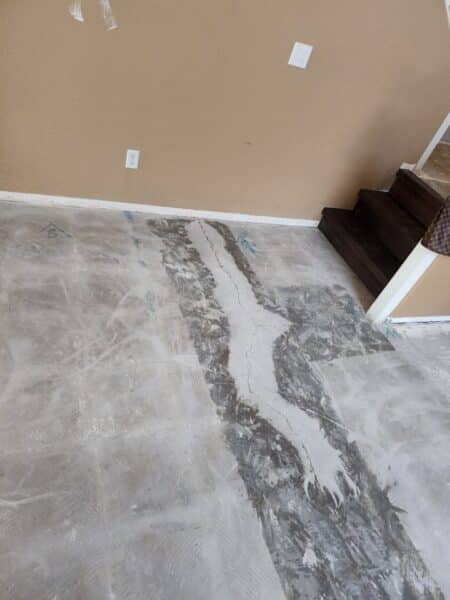
- Foundation cracks in concrete slabs: Arizona’s expansive clay soils cause settlement cracks that are only visible after flooring removal. When we discover them, we install 12-inch crack isolation membrane directly over the crack to prevent movement from transferring to your new floor. We document everything with photos and provide change order pricing before any work proceeds. Cost: typically $1–2 per sq ft for affected areas.
- Unlevel concrete (beyond acceptable tolerances): Low spots, dips, or uneven areas in your slab can’t be accurately assessed until existing flooring is removed. When leveling is required, we use professional-grade self-leveling compound and provide a change order for materials and labor. This is especially important for large format tile, where even small imperfections telegraph through the tile. Cost: typically $2–5 per sq ft for affected areas.
We never know the exact extent of these conditions until we’re in. What we can promise is that we’ll document them thoroughly, price them clearly, and not proceed without your sign-off. No surprises, no gray areas.
Step 5: LVP or Tile Installation
For LVP: We establish layout lines, place expansion spacers at all walls, and install planks with fully engaged click-lock joints in a properly staggered pattern. Every cut at walls, doorways, and obstacles is made precisely. Expansion gaps are maintained at all walls.
For tile: We plan the complete layout before setting a single tile — starting points, pattern direction, and transition coordination. We select the correct thinset for your tile size and apply it with the appropriate notch trowel. We back-butter every tile for 100% coverage with no hollow spots. The Raimondi tile leveling system goes on every installation to ensure perfectly flat results with zero lippage. After a 24–48 hour thinset cure, we apply our premium professional-grade grout that never requires sealing.
For tile on wood subfloors, we install Laticrete Strata Mat directly to the wood using premium thinset — no cement board required. Strata Mat provides essential uncoupling, crack isolation, and a superior bonding surface.
Step 6: Finishing Details, Transitions, and Baseboards
We install all transitions at every flooring change and doorway — T-moldings, reducers, thresholds — and reinstall or replace baseboards for a clean, finished appearance. For tile installations, we strongly recommend baseboard removal before installation so tile extends fully to the wall and baseboards reinstall over the tile edge. This is the difference between a finished look and a caulk-line-at-the-baseboard look.
All debris is removed, floors are cleaned, and we complete a final walkthrough with care and maintenance guidance for your specific flooring material.
Which Flooring Is Right for Each Room?
Kitchen Flooring: LVP or Tile?
Both work well in East Valley kitchens. Tile offers slightly superior long-term durability and is easier to clean when spills sit longer than they should. LVP is more comfortable underfoot for long cooking sessions and installs faster. If your kitchen remodel is part of a larger project, we often coordinate flooring selection with cabinet and countertop choices. Visit our kitchen remodeling page for more.
Bathroom Flooring: LVP or Tile?
For bathroom floors, tile is the industry standard and our primary recommendation. Porcelain handles moisture without question, pairs beautifully with shower tile for a cohesive design, and with our premium grout requires zero maintenance. LVP works in bathrooms too, but tile is the stronger long-term choice. If you’re also remodeling the shower, we coordinate the two for seamless results. Visit our bathroom remodeling page for more.
Living Areas and Bedrooms: LVP or Tile?
For living rooms, family rooms, hallways, and bedrooms, LVP is the more comfortable, practical choice for most homeowners. The warmth underfoot, softer feel, and faster installation make it the preferred option for rooms where you’re walking barefoot, sitting on the floor with kids, or just living daily life. That said, many East Valley homeowners choose large format tile for whole-home installations — the clean, cool look is popular throughout Gilbert, Scottsdale, and Chandler homes where a cohesive modern aesthetic matters most.
Near the Fireplace: LVP or Tile?
Tile. Every time. Porcelain handles radiant heat without any degradation. For the hearth area specifically, tile is the right call — and we can coordinate it with your fireplace facing if you’re doing a full fireplace refresh. Visit our fireplace remodeling page to see how we handle the combination.
Whole-Home Flooring: LVP or Tile?
This is where the decision is most personal. Whole-home tile installations are a significant investment but create a look that photographs beautifully and holds value extremely well — a real selling point in Scottsdale, Tempe, and newer Gilbert and Chandler communities. Whole-home LVP delivers a cohesive modern look at lower cost with faster installation, and is often the choice for homeowners who prioritize comfort and value. We help you evaluate both options during consultation based on your home’s layout, your lifestyle, and your long-term goals.
LVP vs Tile: Local Considerations by City
East Valley homes aren’t identical, and the right flooring choice can vary by neighborhood and home construction era.
Gilbert and Chandler
Many Gilbert and Chandler homes are built on post-tension slab foundations, which means foundation crack discovery during flooring removal is common. Both LVP and tile installations in these areas frequently encounter crack membrane change orders — something we always communicate upfront so there are no surprises. Newer homes in both cities tend to have great-condition concrete slabs that are straightforward to prep.
Mesa
Mesa homes span a wide range of construction eras — from 1960s builds with older subfloors to newer communities with modern slab construction. Older homes are more likely to need leveling compound before tile installation. We assess this during consultation and plan accordingly.
Tempe
Tempe homes often include multi-story construction with wood subfloors on upper levels — an area where Laticrete Strata Mat is standard for any tile installation. LVP installs efficiently on wood subfloors as well. If you’re doing a bathroom remodel upstairs, subfloor evaluation is always part of our process.
Scottsdale
Scottsdale homeowners tend to gravitate toward large format tile for whole-home installations — the clean, contemporary look aligns well with the design aesthetic common in Scottsdale custom homes and newer communities. Large format tile demands the most precise subfloor preparation and leveling of any flooring type, which is why our process-first approach matters here more than anywhere.
Ahwatukee
Ahwatukee homes are primarily built on slab foundations with a mix of construction eras. Both LVP and tile are popular here. Ahwatukee’s hillside homes sometimes see more foundation movement than flat-lot construction, making crack isolation membrane a more common unforeseen condition — and a more important one to address properly.
Frequently Asked Questions About LVP vs Tile in Arizona
Is LVP or tile better for Arizona’s heat?
Both handle Arizona heat well — but tile is more dimensionally stable under extreme temperatures. Tile is inorganic and won’t shift or expand regardless of heat. Quality rigid core LVP performs well in most conditions, but is better kept away from sustained radiant heat sources like fireplace hearths or rooms that get exceptionally hot. For the majority of East Valley living areas, premium LVP performs without issue. When in doubt, we’ll give you a specific recommendation based on your home’s sun exposure and HVAC performance.
Which lasts longer — LVP or tile?
A professionally installed tile floor with premium porcelain and our leveling system can last 50+ years. Premium LVP typically has a 20–30 year lifespan with proper care. If longevity is your primary metric, tile wins — but only with professional installation. A poorly installed tile floor fails faster than quality LVP.
Is LVP or tile easier to clean in an Arizona home?
Both are easy to clean with the right products and our premium grout (which never requires sealing). Day-to-day, LVP may be slightly more forgiving — no grout lines to worry about. Tile with standard contractor grout requires annual sealing, which adds a maintenance step. Our professional-grade grout system eliminates that entirely.
Can I mix LVP and tile in different rooms?
Absolutely. Many East Valley homeowners use tile in bathrooms and kitchens, then LVP in living areas and bedrooms. The key is thoughtful transition planning at doorways and flooring changes — we plan all transition points before installation so the finished look feels intentional.
How much more expensive is tile than LVP?
Significantly more. LVP runs $15–20 per square foot all-in (removal, materials, and installation) — a whole-home project at 1,500 sq ft typically runs $22,500–$30,000. Tile runs $22–27 per square foot all-in — the same whole-home project runs $33,000–$40,500. The investment in tile is real, but so is the longevity and design ceiling. We provide detailed pricing during consultation based on your actual square footage, material selections, and subfloor conditions. Visit our flooring FAQs for more cost detail.
What happens if you find cracks or unlevel floors during demo?
These are unforeseen conditions that can’t be detected until existing flooring is removed. When we find them, we stop, document with photos, and provide a clear change order with pricing before any additional work proceeds. We never proceed with crack membrane or self-leveling compound work without your approval. Foundation cracks run $1–2 per sq ft for affected areas; self-leveling compound runs $2–5 per sq ft. We don’t know the exact scope until we’re in — but we handle it transparently every time.
Does LVP work over concrete slabs?
Yes — LVP is excellent over concrete slabs, which are the most common foundation type in Gilbert, Chandler, Mesa, and throughout the East Valley. We always moisture test concrete slabs before LVP installation. Quality rigid core LVP handles concrete’s minor imperfections better than tile, though we still address any unlevel areas beyond acceptable tolerances before installation.
What flooring does Mustache Approved recommend for bathrooms?
Tile. Porcelain tile pairs seamlessly with shower tile, handles moisture without compromise, and with our premium grout system requires essentially zero maintenance. For shower floors and areas with direct water exposure, tile is always the right call. For bathroom floors more broadly, LVP is a comfortable alternative if warmth and comfort underfoot are priorities. We discuss both options during consultation.
Do I have to move all my furniture before flooring installation?
Yes — rooms need to be cleared before installation day. We discuss furniture logistics during planning. Homeowners handle moving their furniture out. For whole-home flooring projects, we plan phases to minimize disruption as much as possible.
Can you install LVP or tile during a full kitchen or bathroom remodel?
Yes, and it’s often the most efficient approach. We coordinate flooring installation with other project phases — demo, plumbing, tile work — so transitions and timing work seamlessly. Visit our kitchen remodeling and bathroom remodeling pages for project coordination details.
The Bottom Line: LVP vs Tile for East Valley Homeowners
There’s no single right answer — but there are clear patterns based on how you live, what you prioritize, and which rooms you’re flooring.
Choose LVP if:
- Comfort underfoot is a daily priority
- You want the look of hardwood without wood’s vulnerability to Arizona’s dry climate
- Faster installation and lower cost are important
- You’re doing a whole-home flooring update on a defined budget
- You want minimal disruption and quick turnaround
Choose tile if:
- Long-term durability and maximum longevity are the priority
- You want design flexibility — large format, patterns, herringbone, wood plank looks
- You’re flooring bathrooms, kitchens, or areas with direct moisture exposure
- The investment reflects the long-term value you want to build into the home
- You want the floor that photographs best and appeals most in competitive East Valley markets
Many East Valley homeowners end up with both — tile where moisture and durability matter most, LVP in bedrooms and living areas where comfort takes priority. We help you think through the combination during consultation so every material is in the right place.
Ready to Choose the Right Flooring for Your East Valley Home?
Whether you’re leaning toward LVP, tile, or a combination of both, Mustache Approved Remodeling is here to help you make the right call. We serve homeowners throughout Gilbert, Chandler, Mesa, Tempe, Scottsdale, and Ahwatukee with professional flooring installation, transparent pricing, and zero shortcuts on subfloor preparation.
We follow our proven 6-Step Remodeling Process to ensure quality results, clear communication, and no surprises from consultation through final walkthrough.
View our flooring project gallery or contact Mustache Approved Remodeling to schedule a consultation today.
Additional Resources:
- Flooring Installation — All Options for East Valley Homes
- Tile Flooring Installation — Premium Porcelain Floors
- Flooring FAQs — Common Questions Answered
- Virtual Showroom — See Your New Floors Before We Install
- Bathroom Remodeling Services — Tile Flooring and Shower Coordination
- Kitchen Remodeling Services — Kitchen Flooring Options
- Fireplace Remodeling — Hearth Tile Coordination
- Whole Home Remodeling — Flooring as Part of Larger Projects
Mustache Approved Remodeling
ROC #309760 | Licensed, Bonded, Insured
Serving Gilbert, Chandler, Mesa, Tempe, Scottsdale & Ahwatukee
Last Updated: March 28, 2026
